
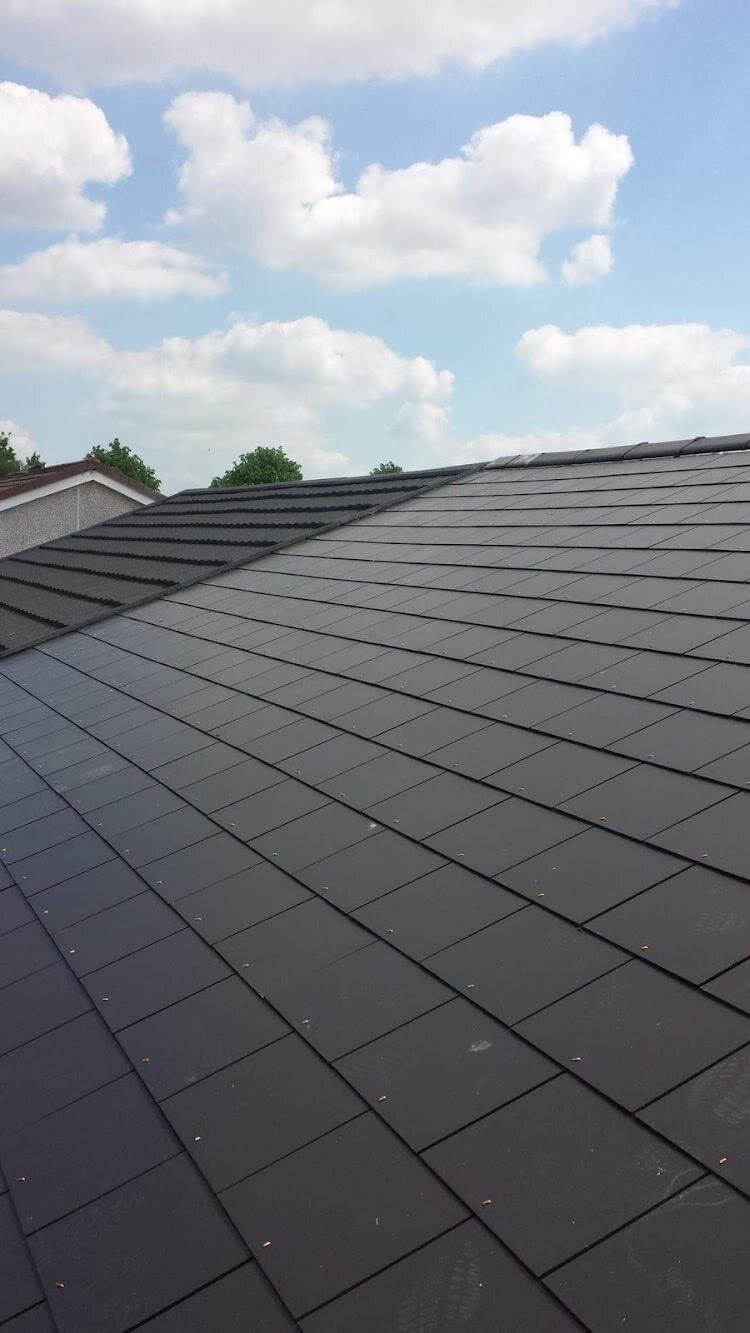
We get most of our emergency calls between November and February. Almost all of them could have been prevented by a 30-minute check in October. Here's what to do, in order.
Part 1: The visual inspection (10 minutes)
Stand on the pavement opposite your house and look at the roof. You don't need to climb anything. You're looking for:
Slipped or missing tiles
Any tile that's not where it should be — sticking up, sliding down, missing entirely. Look at all four slopes if you have a pyramid roof. Check the ridges (the top edges) and the verges (the side edges).
Sagging or uneven roof line
The ridge should be a straight line. Any visible dip means trouble underneath.
Vegetation growing on the roof
Moss is OK in small amounts, ugly in large amounts, and a problem when it's lifting tiles. Plants growing in the gutters definitely need attention.
Damaged chimney
Crumbling pointing, leaning stack, missing pots, broken cowls. Worcestershire's many tall Victorian chimneys are particularly vulnerable to wind damage.
Broken or sagging guttering
Guttering should be a straight line attached firmly to the fascia. Sagging means failed brackets. Plant growth means it's been blocked for a while.
Part 2: The loft check (10 minutes)
Pop into the loft on a clear day. Take a torch if it's dim.
Look for daylight
Turn the loft light off. Any tiny dot of daylight from above means a missing tile or a hole. Any large area of light means worse.
Check the underlay
The membrane between the rafters should be intact, taut and dry. Sagging, torn or shredded underlay is a serious sign — water is getting through more than just one spot.
Look for staining
Dark patches on rafters, joists or insulation indicate active or recent leaks. Note the location — when you go back outside, you can correlate this with the part of the roof that's leaking.
Smell
A damp loft smells musty. A healthy loft smells of timber. Trust your nose.
Part 3: Gutter clean (30 minutes — once a year minimum)
This is the single most important winter prep task. Blocked gutters cause more roof and wall damage than every other issue combined.
If you're confident with a ladder and have a low single-storey roof, you can DIY this:
- Use a stable ladder, ideally with someone holding it
- Wear gloves
- Scoop out leaves, moss and debris by hand into a bucket
- Flush each section with a hose to confirm flow
- Check that downpipes are clear (water should run away freely)
- Look for splits, brackets pulling away, or sections sagging
If you're not comfortable with ladders, this is a job for a roofer. Gutter cleaning costs £100–£200 for a typical Worcestershire house — money well spent compared to the £2,000 in damp damage that a blocked downpipe can cause over a wet winter.
Part 4: Nearby trees (5 minutes)
Walk around the house and look at any trees within 5–10 metres of the roof. Are there branches overhanging the roof? Dead branches? Is anything close to the chimney? Storm winds will bring branches down — sometimes through the roof.
Branch removal is a job for a tree surgeon, not a roofer. But it's worth booking now rather than dealing with the aftermath.
Part 5: Things to fix before winter
If your inspection found any of these, sort them now — not in January when the leak is already happening:
- Slipped or broken tiles — £150–£350, usually a same-day job
- Cracked ridge mortar — £400–£900 to repoint a full ridge
- Loose flashings around chimneys — £300–£700
- Sagging or split gutters — repair £150–£350, full replacement £600–£1,400
- Vegetation in gutters — clean them
- Crumbling chimney pointing — £400–£900
When to call a roofer for the inspection
If you're not confident going up a ladder, or if your visual check from the ground turned up something concerning, just call a roofer. A free roof inspection takes us 30 minutes, includes the loft, includes photos, and gives you a clear picture of what — if anything — needs doing.
We don't charge for inspections. We don't pressure-sell. If you don't need anything done, we'll tell you. Call 07930 965629 or email us to book.
Storm warning — what to do
If a major storm is forecast and you suspect your roof is vulnerable:
- Move valuables away from any rooms with previous leaks
- Have buckets and towels accessible
- Save our number: 07930 965629
- If a leak starts during the storm, place containers and call us — we'll come out as soon as conditions allow
Most insurance policies cover storm damage. Document everything (photos, video) before any clean-up — it helps the claim.