
Water doesn't fall straight down
The single most important thing to understand about roof leaks: water finds the path of least resistance, not the shortest path. By the time it appears on your ceiling, it might have travelled metres along rafters, through insulation, around joists and across plasterboard before showing up.
We've traced leaks where the water entered the roof three metres from where it dripped onto the carpet. This is why amateur "fixes" so often don't work.
The most common causes of leaks in Worcestershire
1. Slipped or broken tiles (about 30% of leaks)
Wind, freeze-thaw cycles, or simple age cause tiles to slip out of position or crack. Water gets through the gap onto the underlay. If the underlay is healthy, this might not produce an interior leak for years — but eventually the underlay perishes too, and water starts coming through.
Where to look: from the ground, walk around the property and check for tiles that don't match the pattern. From the loft, check for daylight.
2. Failed flashings (about 25% of leaks)
Lead flashings around chimneys, abutment walls, dormer cheeks, and valleys are the most common cause of persistent slow leaks. The lead corrodes, the mortar around it fails, or sealants used as cheap shortcuts give way.
Where to look: directly below any chimney, dormer, or wall abutment. If the leak is near these features, flashing is the prime suspect.
3. Failed ridge or hip mortar (about 15% of leaks)
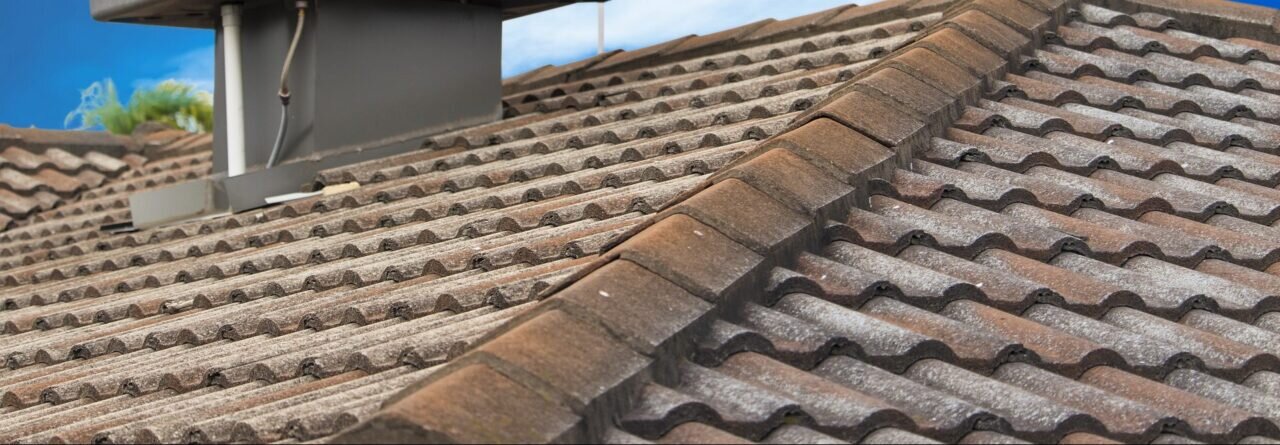
Ridge tiles sit at the top of the roof and take direct horizontal rain. The mortar bedding them gradually fails — frost-shattered, cracked, or simply washed out. Once water gets behind the ridge, it can run for metres along the inside of the roof before showing up on a ceiling.
Where to look: from the ground, look at the line of the ridge and hip tiles. Any visible cracks or missing mortar means trouble.
4. Blocked or undersized gutters (about 10% of leaks)
Gutters that overflow during heavy rain push water back under the lowest tiles, where it leaks into the eaves. Common after autumn leaf falls. Often misdiagnosed as a roof problem when it's actually a gutter problem.
Where to look: watch the gutters during the next downpour. If water is overshooting them, the gutters are the issue.
5. Chimney brick failure (about 8% of leaks)
Old chimney brick that's frost-shattered or porous absorbs rain and lets it migrate through the brick into the structure of the building. The leak shows up around the chimney breast inside.
6. Failed underlay (about 5% of leaks)
When the underlay fails across the whole roof, you get multiple, scattered leak points that change with each rain event. This usually means a re-roof is overdue, not a repair.
7. Condensation (about 5%, but often misdiagnosed)
Damp patches on bedroom ceilings sometimes aren't leaks at all — they're condensation in poorly ventilated lofts, particularly where modern living (showers, drying clothes inside) creates moisture that has nowhere to go.
How to tell: condensation patches are usually evenly distributed, worst in cold weather, and don't correlate with rain. True leaks come and go with the weather.
8. Solar panel installations done badly (about 2%)
Cheap solar installs that don't properly seal around mounting brackets cause leaks years after installation. Particularly common with installations done during the 2010-2014 boom by companies that no longer exist.
How a professional finds the source
When we get called for a leak, here's what we actually do:
Step 1: The interior inspection
Where exactly is the water appearing? Is the patch fresh or old? Does it correlate with specific weather (heavy rain only? wind from a particular direction? after snow?)? These clues narrow the search before we touch the roof.
Step 2: The loft inspection
Most leaks can be diagnosed from the loft. We follow water trails on rafters and joists — these run downhill from the entry point. Wet patches, dark stains, sagging insulation all tell us where to look on the outside.
Step 3: The roof inspection
Once we know roughly where to look, we check the roof itself — tiles, flashings, ridges, valleys. We use moisture meters where needed. We almost always know the cause before climbing up; the roof check is to confirm and to plan the repair.
Step 4: The fix
We fix the actual source, not just the symptom. Sealant is rarely the right answer — it's a 6-month patch on a problem that needs lead, tile or mortar work.
Why DIY leak fixing usually fails
Most DIY leak repairs fail because:
- Wrong location identified — fixing the spot directly above the interior drip rarely works
- Wrong material used — silicone sealant on a flashing failure is a 3-month fix
- Underlying cause ignored — fixing a tile but not the failed underlay underneath
- Safety — falls from roofs are serious
What to do if you discover a leak right now
Immediate steps
- Move valuables and electronics away
- Place a bucket under the drip — line with a towel to absorb splash
- If a wet ceiling is bulging, carefully poke a small hole in the lowest point to let water out (controlled release prevents collapse)
- Turn off electrics in the affected area if water is anywhere near light fittings
- Take photos for insurance
- Don't go on the roof yourself
Then call us
07930 965629 — we cover the whole of Worcestershire and respond fast to leak calls. More on our emergency response here.
Insurance and storm damage
Most home insurance policies in the UK cover storm damage — and we provide the documentation insurance assessors need (photos, written reports, professional assessment of cause). If your leak is from a recent storm, document everything and check your policy before paying out of pocket.
Free leak diagnosis
We don't charge for inspecting a leak. We come, we look, we tell you what's wrong, and we send you a written quote within 24 hours. No deposits, no pressure, no obligation.
Call 07930 965629 if you've got a leak. If it's an emergency we'll be on site within 24 hours; for non-urgent leaks, usually within a few days.