
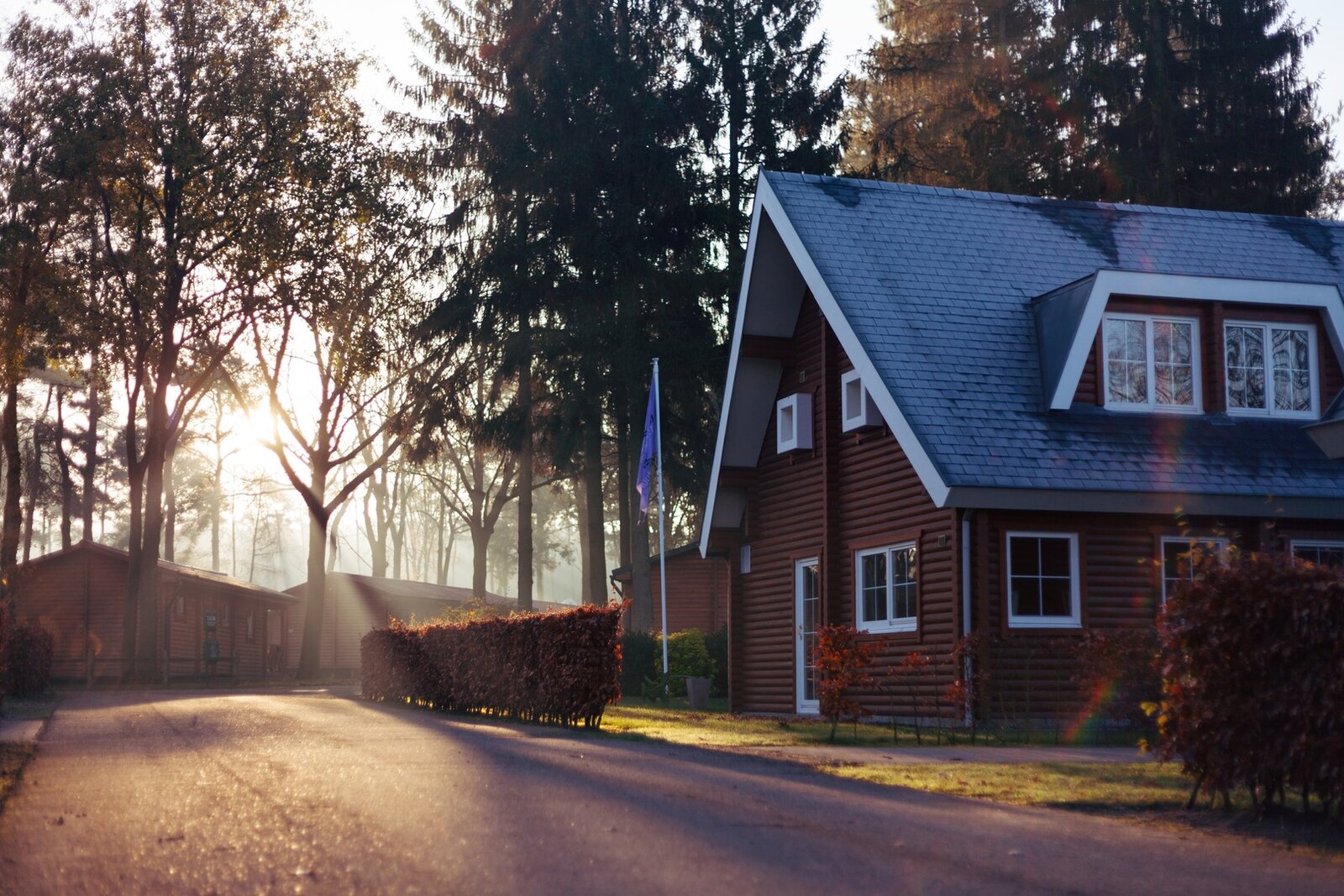
Kidderminster's housing reflects its history as one of England's great industrial towns. From the 18th century onwards it grew rapidly around the carpet industry — and that boom shaped the town's roofs as much as it shaped its mills, churches, and streets. Today, those Victorian terraces are still the dominant housing type in much of central Kidderminster, alongside large estates of post-war and modern housing.
We work across all of DY10 and DY11 regularly. Here's how the town's housing breaks down — and what each type means for your roof.
Kidderminster's housing in three eras
1. Pre-1900 — the carpet-town era
The streets around the town centre, the canal and the old mill sites are dominated by Victorian and late-Georgian terraced housing — much of it built between 1850 and 1900 to house the workforce of the carpet industry. By the 1850s, Kidderminster had over 30 carpet manufacturers, and waves of workers needed housing.
Areas with substantial Victorian housing include around Park Lane, the streets off Stourport Road, parts of Sutton Road, the area near St Mary's Church, the streets around Brinton Park, and the Mill Street/Castle Road area. Many of these properties are now in a Conservation Area and some are listed.
Typical roofs: Welsh slate is the dominant material on this era of housing, with later additions sometimes in clay tile. Original lead valleys, lead flashings around shared-stack chimneys (very common on Kidderminster terraces), and ornate ridge tiles. Many of these roofs are now original — 130+ years old — and the slate, while still sound, sits on perished underlay and corroded original nails.
2. 1900–1960 — inter-war expansion
The early to mid-20th century saw modest expansion of Kidderminster — typically semi-detached houses with small clay tile or early concrete tile roofs. Areas like the older parts of Hoo Brook, Spennells (the original section, before the modern estate), and parts of Comberton Hill have housing from this era.
Most of these roofs are now reaching the end of their original lifespan and are common candidates for re-roofing.
3. 1960s onwards — the modern estates
After the carpet industry began its long decline in the 1960s and 1970s, Kidderminster transformed into a commuter town for Birmingham and Worcester. The big estates of Spennells, Greenhill, Habberley, Foley Park, Aggborough, and Broadwaters were built largely in the 1970s through the 2000s.
Typical roofs: concrete interlocking tiles, modern bituminous or breathable underlay, mechanical fixings on newer estates. Most are 30-50 years old and starting to show their age — particularly the underlay layer, which is reaching the end of its life on the older end.
Postcodes we cover in and around Kidderminster
- DY10 1: Town centre, near the river, town hall area
- DY10 2: Greenhill, the eastern side of town
- DY10 3: Aggborough, Spennells, southern estates
- DY10 4: Hoo Brook, Foley Park, south-west
- DY11 5: Habberley, Broadwaters, the north and north-west
- DY11 6: Comberton, Hurcott, Wolverley side
- DY11 7: Industrial areas and outer estates
Plus surrounding villages — Wolverley, Cookley, Caunsall, Trimpley, Blakedown, Chaddesley Corbett, Wribbenhall.
Conservation Area considerations
Wyre Forest District Council has designated several Conservation Areas in and around Kidderminster, including:
- Town Centre Conservation Area — covers much of the historic core
- Broadwaters and Comberton Hill — Victorian and Edwardian streets
- Mill areas — particularly around the canal and old factory sites
- Surrounding villages — Wolverley, Cookley, Chaddesley Corbett
If your property is in a Conservation Area or is listed, roofing work usually requires like-for-like materials (real Welsh slate, not artificial), conservation officer engagement, and sometimes Listed Building Consent. Wyre Forest DC is generally helpful with pre-application advice — and we're happy to liaise on your behalf.
For more on planning permission and conservation requirements, see our UK roofing planning permission guide.
Typical Kidderminster roofing jobs — what they cost
Slipped slate, Victorian terrace
£200–£450 per slate replacement on terraced housing. Higher than tile because of access (multi-storey), original nailing patterns, and matching reclaimed slate.
Lead flashing replacement, shared-stack chimney
£400–£900. Common on Victorian Kidderminster terraces where chimneys are shared between properties. Code 4 or 5 lead, properly dressed and fixed.
Slipped tile, modern estate
£150–£300. Common on Spennells, Aggborough, Habberley and Foley Park estates. Usually same-day.
Full re-roof, Victorian terrace (slate)
£8,500–£14,000 for a full slate re-roof on a typical Kidderminster terrace. Variation depends on whether reclaimed slate is needed (conservation areas) and complexity of the lead work. We strip the slates, replace rotten battens, fit new breathable underlay, and re-slate (usually with reclaimed Welsh slate to match).
Full re-roof, modern semi (concrete tile)
£6,500–£9,500 on a typical 1970s/1980s Kidderminster semi. New battens, breathable underlay, replacement tiles, fresh lead and ridge work.
Chimney repointing, Victorian terrace
£500–£1,000. Tall Victorian Kidderminster chimneys often need full repointing every 60-80 years. Lime mortar in conservation areas, modern weather-resistant mortar elsewhere.
Why Kidderminster roofs need a careful approach
There are a few specific things about Kidderminster roofs that matter when you're picking a roofer:
Shared chimney stacks on terraces
Many Kidderminster terraces have shared chimney stacks running between two or even three properties. Work on these requires coordination with neighbours and careful detailing — repointing or rebuilding has implications for both sides. We've handled plenty of these and we know how to plan them.
Original nailing on Victorian slate
Original Welsh slate roofs were nailed with iron nails, which are now corroding. Even if the slates themselves are sound, the nails may be failing — leading to creeping slate slip across the whole roof. Once this starts, it's usually a re-roof rather than a tile-by-tile repair.
Soft-spot risks in carpet-mill housing
A small number of Kidderminster terraces were built quickly during industry boom periods with variable build quality. Some have rafter-foot weakness or wall-tie issues that show up first in roof movement. We always inspect properly before re-roofing — addressing structural issues now is much cheaper than dealing with them later.
We cover all of Kidderminster
ASH Roofing covers DY10 and DY11 across all property types — from Victorian terraces in the town centre to modern executive homes on the outer estates. Same family team, same standards, regardless of property age.
Call 07930 965629 for a free, no-obligation roof inspection and written quote within 24 hours. Or email us with your address and a description of the issue.